

Sylvania, At Last
And belatedly completing my 2025 Adventure Challenge

In 2025, I challenged myself to try twelve new outdoor (and outdoor-adjacent) activities to get out of my comfort zone and have some new adventures. This is the (belated) recap of one of those attempts.
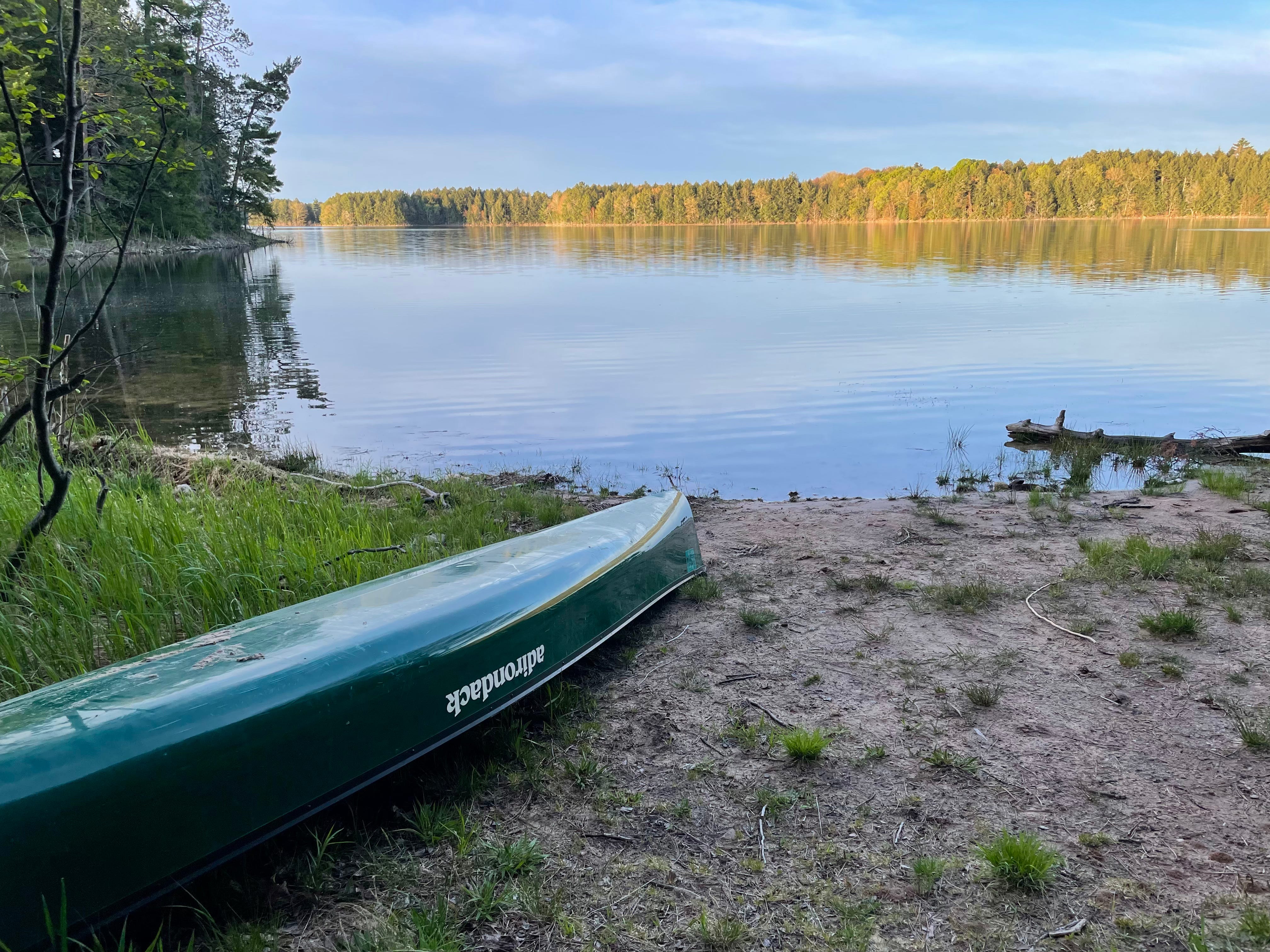
I first learned about the Sylvania Wilderness five years ago while waiting to board the ferry at Isle Royale National Park. Rock Harbor was densely covered in fog, so rather than one last wander along the shoreline before heading home, my friend and I chatted with another backpacker at the dock. She asked us about our upcoming hiking plans—it was late June, so months of outdoor opportunity stretched ahead of us—and mentioned that she would soon be heading to Sylvania. When met with blank faces, she clarified that it was a “mini Boundary Waters” near the Wisconsin border in the Upper Peninsula. Her pitch of beautiful lakes in a small wilderness area that didn’t require permits won me over and I have spent every summer since wondering how to make a trip there a reality. Over Memorial Day weekend, I finally visited for my first canoe camping experience.
The hardest part of making the Sylvania trip a reality was finding a paddling partner. My outdoorsy friends generally fall into two categories: they have a romantic partner who they do outdoor activities with or they have extensive canoeing experience and a deep roster of paddling friends. My resume mostly consists of Saturday morning paddles on the Carmans River as a kid1, so I’m not the ideal candidate to fill up an empty seat in someone’s tandem canoe. With no invitations for canoe camping trips forthcoming—or rather, the few invitations that had been proffered fading away as soon as I showed actual interest in hammering out dates and logistics—I eventually took matters into my own hands.

If the experienced paddlers didn’t have room for me to tag along, I decided I would pivot and invite another canoe camping novice. You may remember my friend, K., from a post last year about her first ever camping trip and her fantastic review of the experience: “So far I think I like camping! It’s just sitting around a fire eating brie.” Last summer, she also tried kayaking and as soon as I saw those photos on Instagram, I asked if she would be game to go canoe camping with me. Without any questions or concerns about my paddling qualifications, she said yes!

Our schedules didn’t line up last fall, but with only a couple weeks notice, we realized that we were both free over Memorial Day weekend and—more importantly—campsites at Sylvania were still available. Within hours, our reservations were made and our itinerary finalized. The only thing missing? Time to meet up for a practice paddle.
Knowing that our first time in the canoe together—and my friend’s first time ever—would be at Sylvania, I chose a very easy route from the boat launch to the Pine-2 campsite. Paddle Planner clocked it in at 2.4km of paddling that should take about 29 minutes. I figured that if we managed it in two hours, we’d be doing just fine and still have plenty of time to relax. After all, the goal of the trip was to hang out, eat s’mores and charcuterie next to the campfire, read our books by the water, and enjoy the beauty of an old growth forest. There were no portages or rapids and no need for any technique or navigation beyond just hugging the shoreline to get to camp. In a worst case scenario, we could always just hike out with the canoe along the trail that rings Clark Lake. This would be a short and sweet paddle with no pressure!

On the Saturday of Memorial Day weekend, we headed north to Franklin Lake campground in the Chequamegon-Nicolet National Forest, our launchpad for the next morning so we didn’t have the stress of both driving up and trying to paddle in before dark. With a slightly later start than planned, we arrived at our campsite just in time to enjoy the sunset and then kicked back by the fire with canned cocktails until bedtime. The next morning, the dawn chorus2 roused us bright and early and we took our coffee mugs on a stroll through the campground to check out our surroundings in daylight.


When the coffee was gone and the dry bags packed, we adjusted the straps holding the canoe to my car and headed north once again. First stop: picking up a waterproof map at Sylvania Outfitters. Second stop: checking in at the ranger station. Third stop: the boat launch.
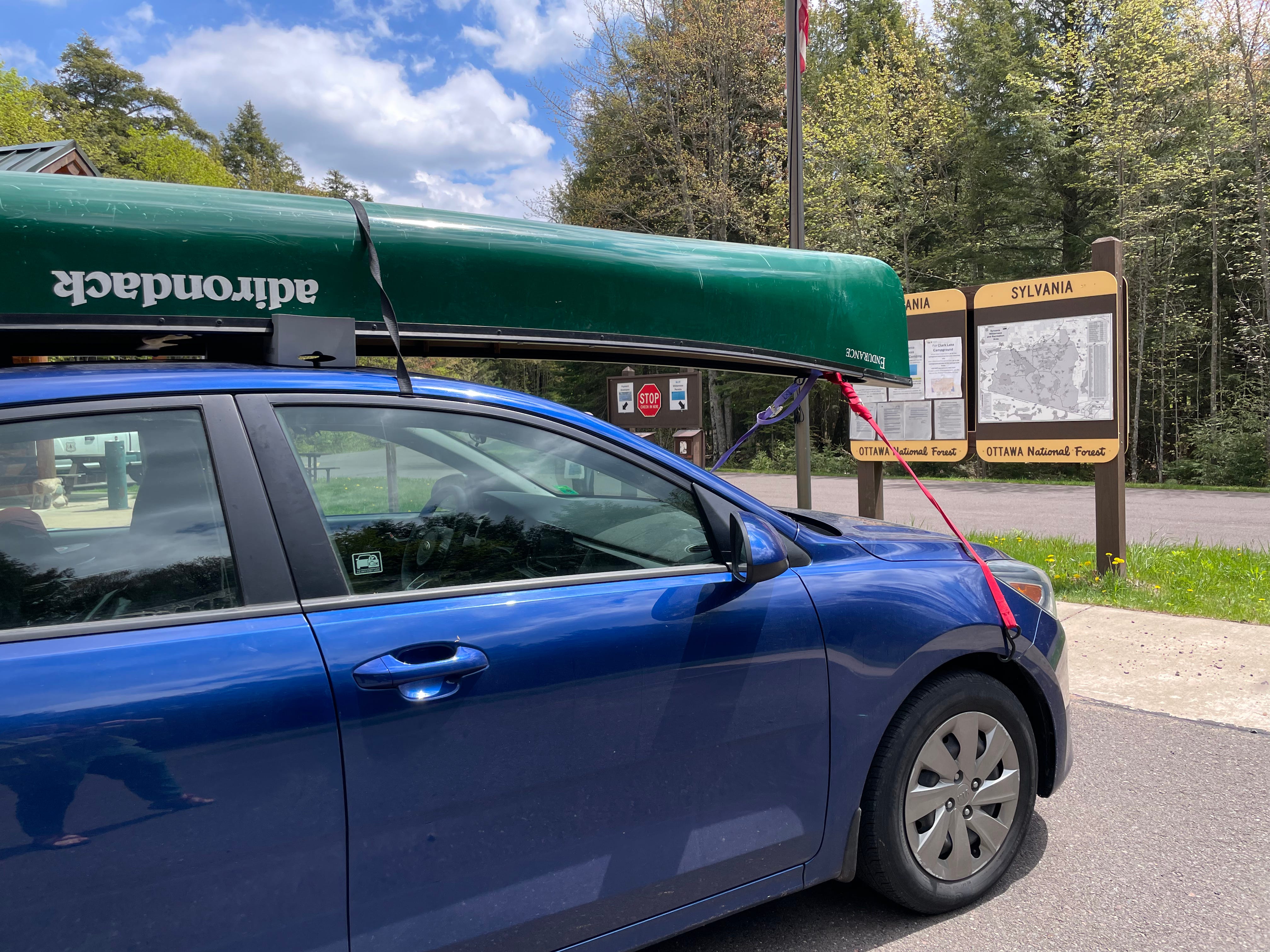
There were more people at the boat launch than I had hoped for, but we managed to get the canoe off the car and fully loaded in the water without any mishaps that would draw attention to our inexperience. Only the relentless swarm of bugs caused aggravation and we countered that with head nets and a healthy spray of repellent on our clothes and skin. However, until we actually got on the water and started paddling, I harbored a secret fear that this whole venture would fall apart the moment we attempted to step into the canoe. I had visions of the boat tipping over in half a foot of water and my friend deciding that maybe even 2.4 km on the water was 2.4 too many. The backup plan—because I always have a backup plan—was retreating to the first come, first served sites at the drive-in campground at Sylvania, which would have been a decidedly less exciting adventure. So I held my breath as we inelegantly entered the canoe in the shallows of Clark Lake.
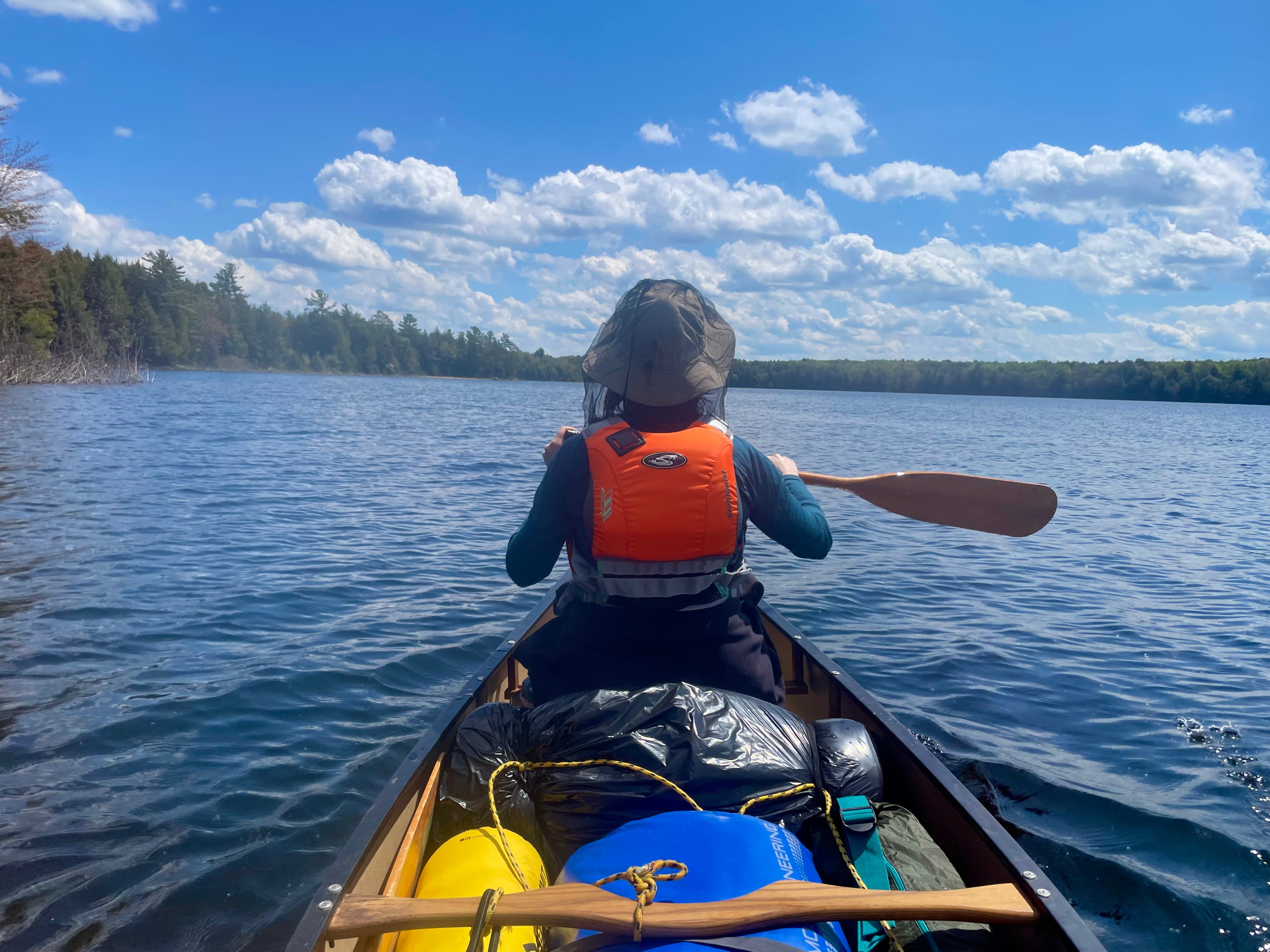
There are conflicting emotions when you are very excited about an outdoor activity, but also feel responsible for the happiness of your adventure buddy. My heart fluttered with joy when we pushed out into the water and my hands grasped the wooden paddle. I also belatedly realized that I had never been the paddler in the stern of the canoe before, having always left that seat—and the steering—to my dad. The sun on my face was perfectly tempered by a light breeze, but I knew I couldn’t relax until we had safely landed at our campsite. After all, I was the party leader on the permit and the only one with any paddling and backcountry camping experience.
Briefly, I let my attention drift as I fumbled with my phone to take a photo of a very big rock. In that moment, the wind gusted and the larger (but not large) waves created the momentary sensation that we might capsize. After that, I stayed focused on the canoe, the water ahead, and my own center of gravity.
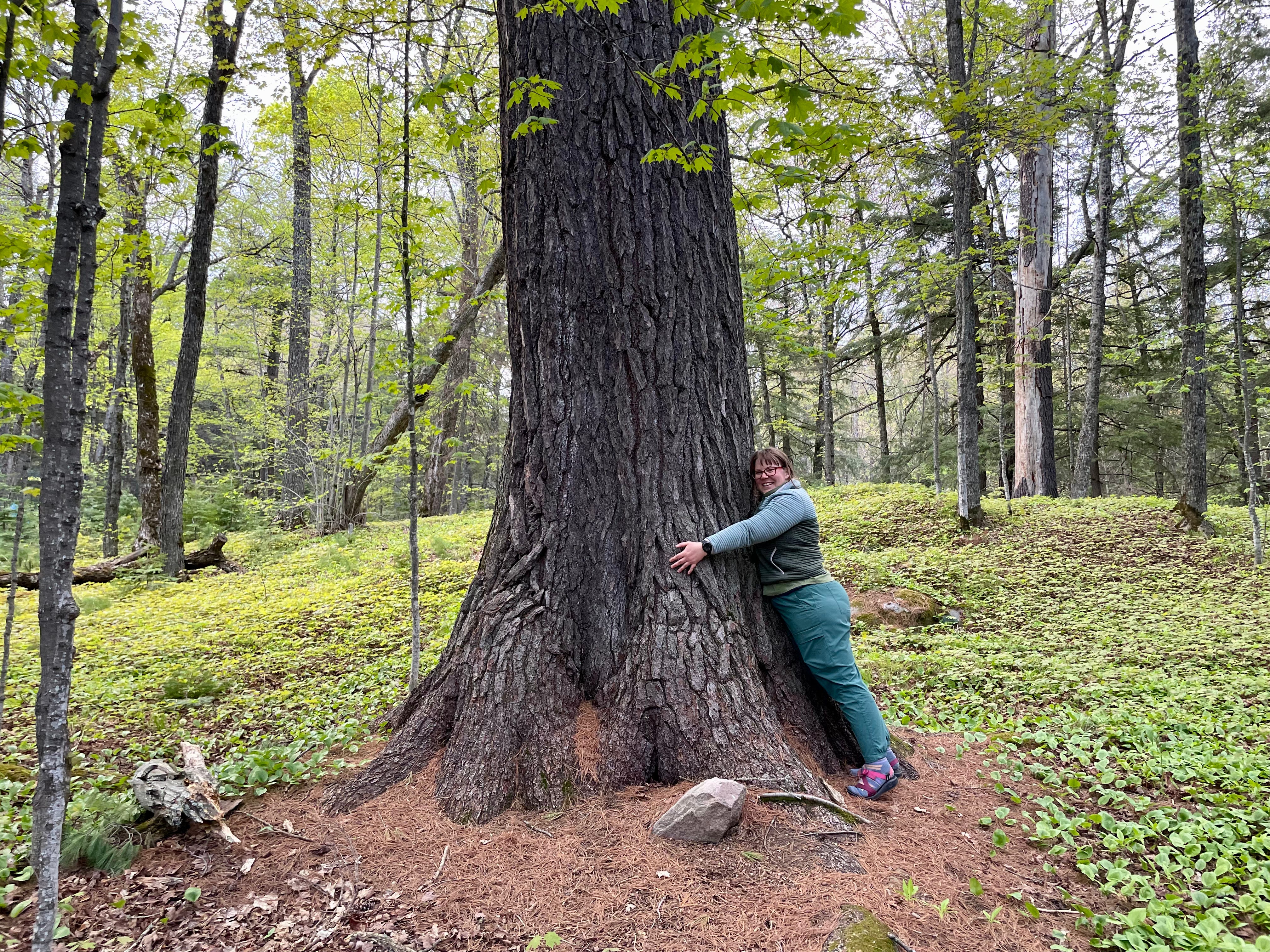
We arrived at the Pine-2 campsite rather unexpectedly. We had missed the sign posts for the four campsites in the Ash and Balsam clusters and only ducked into a tiny cove to investigate when we saw a green kayak on the shoreline. We were sure it would be one of the Balsam sites, but it turned out to be Pine-1, so we carefully paddled around the small spit of land until we found the sign marker for our own site. Paddle Planner had estimated that it would take 29 minutes and we made it in under 35—significantly faster than I had expected based on our skill level. My friend expressed relief that we had arrived, saying that it had been just about the perfect distance for a first canoeing experience. I was relieved that all had gone according to plan, but still felt a burst of disappointment that the on-the-water portion of our day was over.
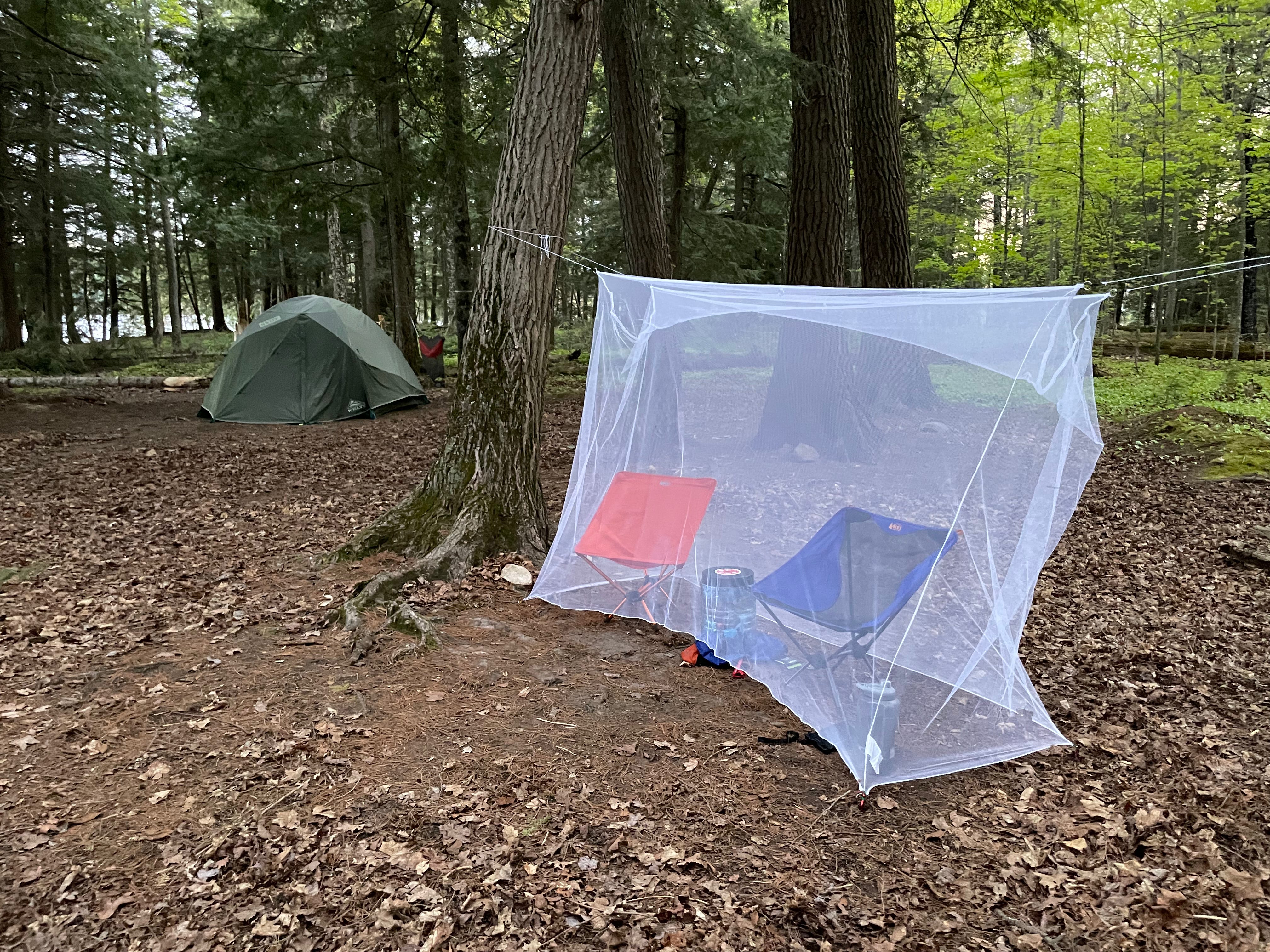
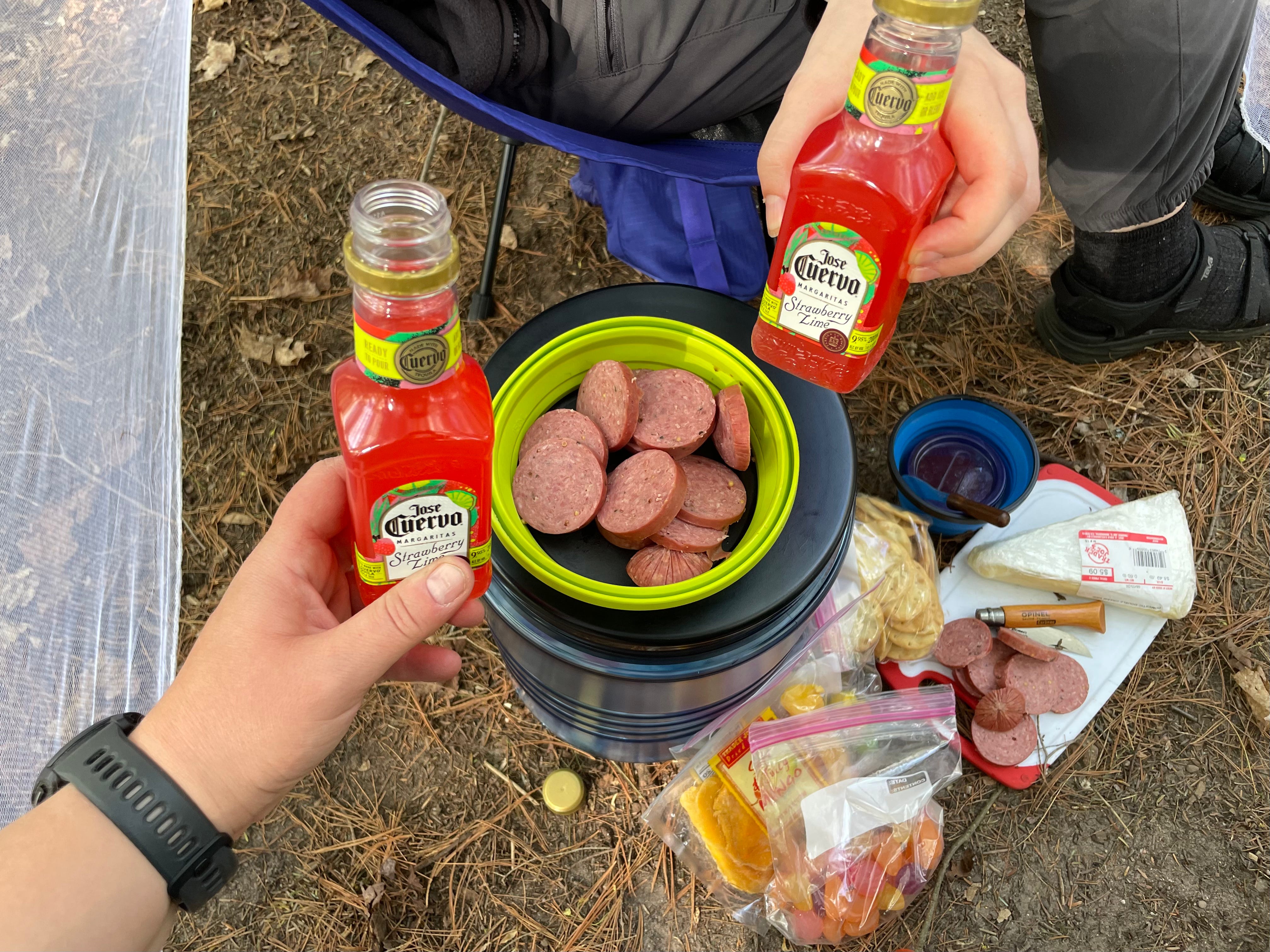
At camp, I pulled out all the bells and whistles to make the backcountry feel as much like a glamping experience as I could. We each had our own tent, plus I set up a lightweight hammock with a bug net and an additional rectangular bug net that fit our backpacking chairs and bear canister (which was playing double duty as a camp table). Previous campers armed with a sharp blade on their handsaw had collected, cut, and stacked firewood, so we had a fire going almost immediately. With the camp chores completed and the pit toilet located, we settled in for an afternoon snack of camp charcuterie and margaritas that morphed into an early dinner before whiling away the rest of the evening reading our ebooks by the fire, watching an incredible sunset over Clark Lake, and making s’mores.
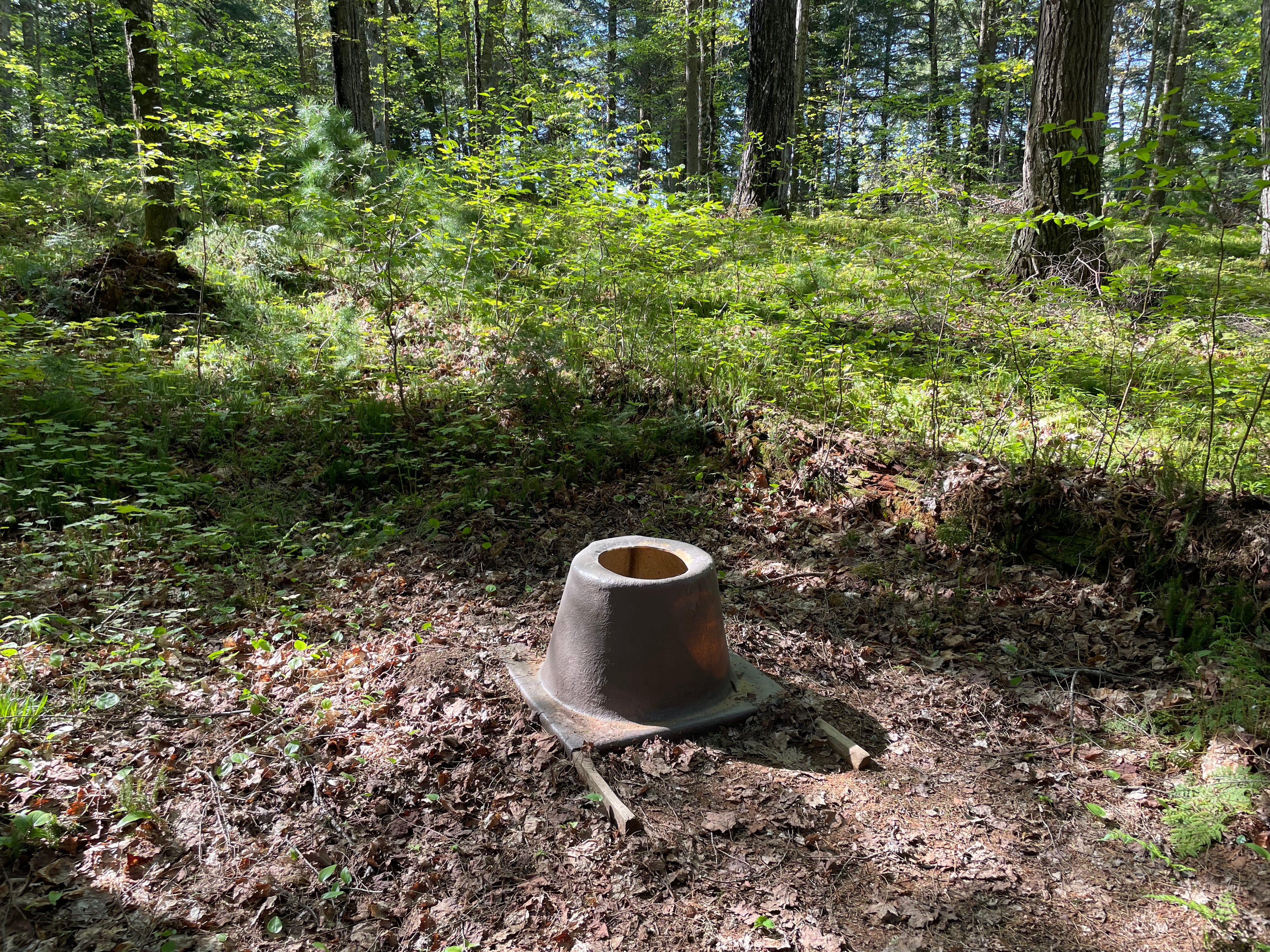
For me, this was a glamping experience with more amenities than I’ve ever had while backpacking and more than I typically bring even when camping near my car. However, this was my friend’s first backcountry experience and only her fourth night ever camping, so no amount of bug netting and cheese could make up for the open-air latrine that seemed to attract every mosquito in the county and was in view of the tents in the neighboring campsite. I was excited to discover lycopods lining the trail to the latrine and photographed them every time nature called; she avoided visiting that area as much as possible. In all my worrying about whether we would be up to the task of paddling to our campsite, I forgot to worry about what the actual wilderness camping experience would be like for a novice.
In an attempt to make the backcountry seem like fun, I had resolved to be chill on this trip. I like my routines for camp chores and organization, but no one wants to be nagged about leaving their sunglasses sitting on a stump near the fire when that is just as valid of a resting spot as (my preference of) inside a tent! Unfortunately, at my core I am decidedly not a chill person, so trying to explain how to set up the hammock that I hadn’t looked at or thought about since last November did not go well. I wanted to involve my friend, but I was also busy scanning my memory banks for long forgotten snippets of the instruction manual (which I had not bothered to review before losing cell service). My brain desperately wanted to implement my autopilot routines and every time I pushed back in the name of flexibility, I found myself misplacing the lighter or my bug net or another small item that usually has a designated place. Perhaps it would have been better for both of us if I had been more rigid from the start instead of focusing all my anxious energy into tying the most perfect knot possible on my Ursack bear bag3 in the dim light of my headlamp with the pressure of an audience.
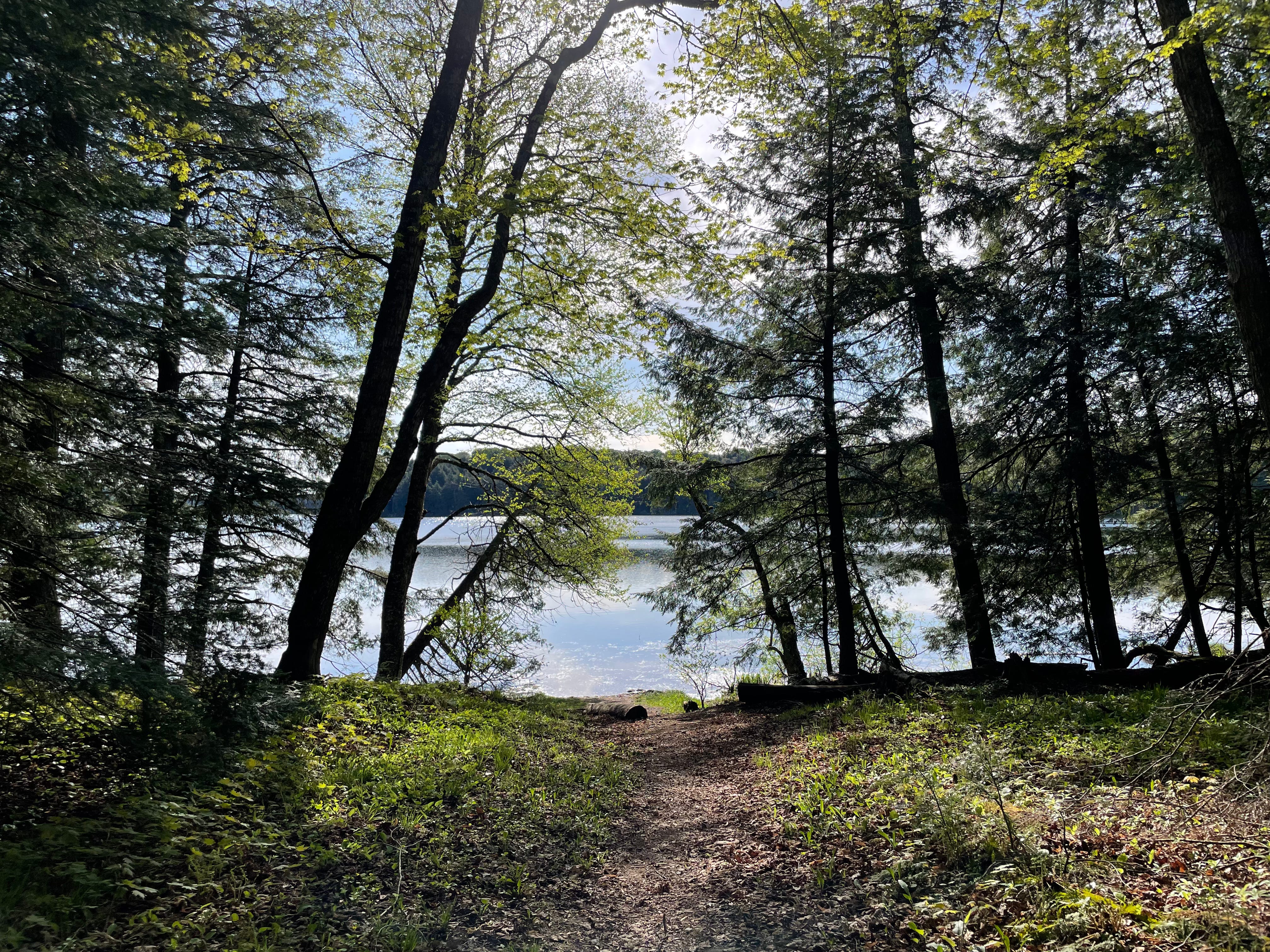
While my guiding skills left much to be desired, the beauty of Sylvania Wilderness did not let me down. On Monday morning, we walked the trail along Clark Lake to check out the nearest portage. Though I knew not to expect blazes, I was surprised to discover at the first trail intersection that there wasn’t a signpost; even Isle Royale—another wilderness area—has wooden posts pointing hikers in the right direction! However, I was truly stunned when we reached the portage trail between Clark Lake and Crooked Lake and there was nothing to mark the location, not even a small and faded post like there was for our campsite.4 Any paddler planning a portage would need a map and a keen eye to get to the right spot!
After walking the portage trail to check out Crooked Lake, we returned to our campsite to pack up and once again test our mettle in the canoe. The wind was brisker than the day before, so I had to put in more effort to keep us pointed in the right direction, but we took a leisurely pace, choosing to go in search of the previously missed Ash and Balsam campsites on our way back to the boat launch. For me, once again, the time on the water ended too soon.
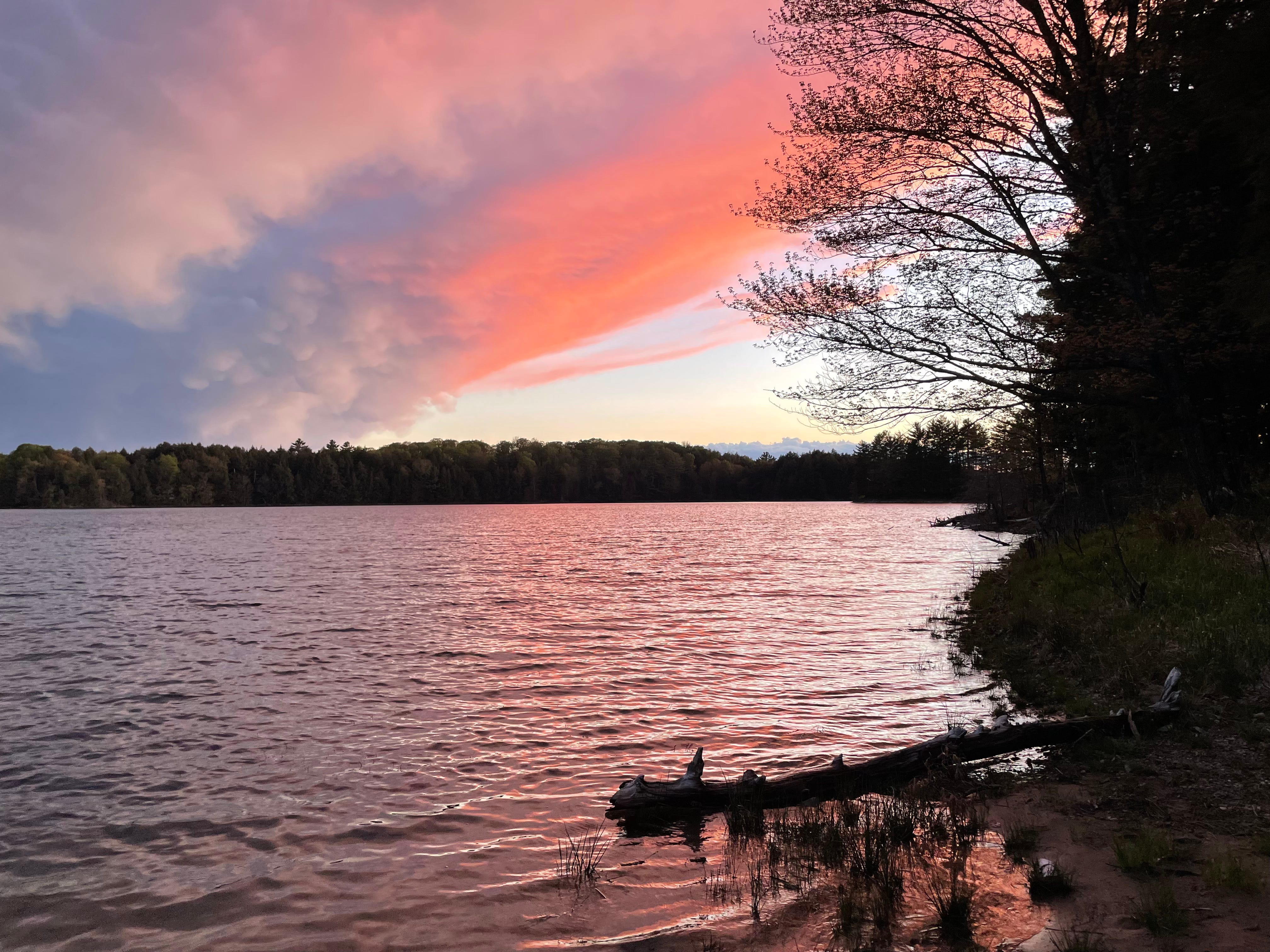
The point of last year’s adventure challenge was to try new things and learn from those experiences. This final (and belated) installment of that challenge reminded me how much I love the water. It also taught me that when introducing friends to outdoor activities, too many new things at once can be disorienting and demoralizing. Though K. enjoyed canoeing, the backcountry camping was a miss and finding ticks crawling in our canoe left a stronger final impression of the Sylvania Wilderness than the picturesque trees reflecting into Clark Lake.
I can now say that I have visited (a small bit of) Sylvania and that I have successfully canoe camped, however, I am in the strange position of finding myself back where I was before completing this challenge: forever in need of a paddling partner.
I think of these canoe outings very fondly because they were almost always followed by a stop at (the now defunct) Wallen’s IGA to pick up a box of apple cider doughnuts from (the also now defunct company) Dutch Mill.
The Merlin app recorded Red-eyed Vireo, Blackburnian Warbler, American Redstart, Black-throated Green Warbler, Ovenbird, and Brown-headed Cowbird.
Yes, I had both a bear canister and an Ursack bear bag on this trip. The bear canister contained our plentiful menu of food and cocktails and I used the Ursack for our coffee mugs, utensils, and other dishware that had come into contact with food. I figured that a bear snuffling her tent would be the final nail in the coffin for future camping trips with K., so I wanted anything that came close to food to be corralled in bear resistant containers.
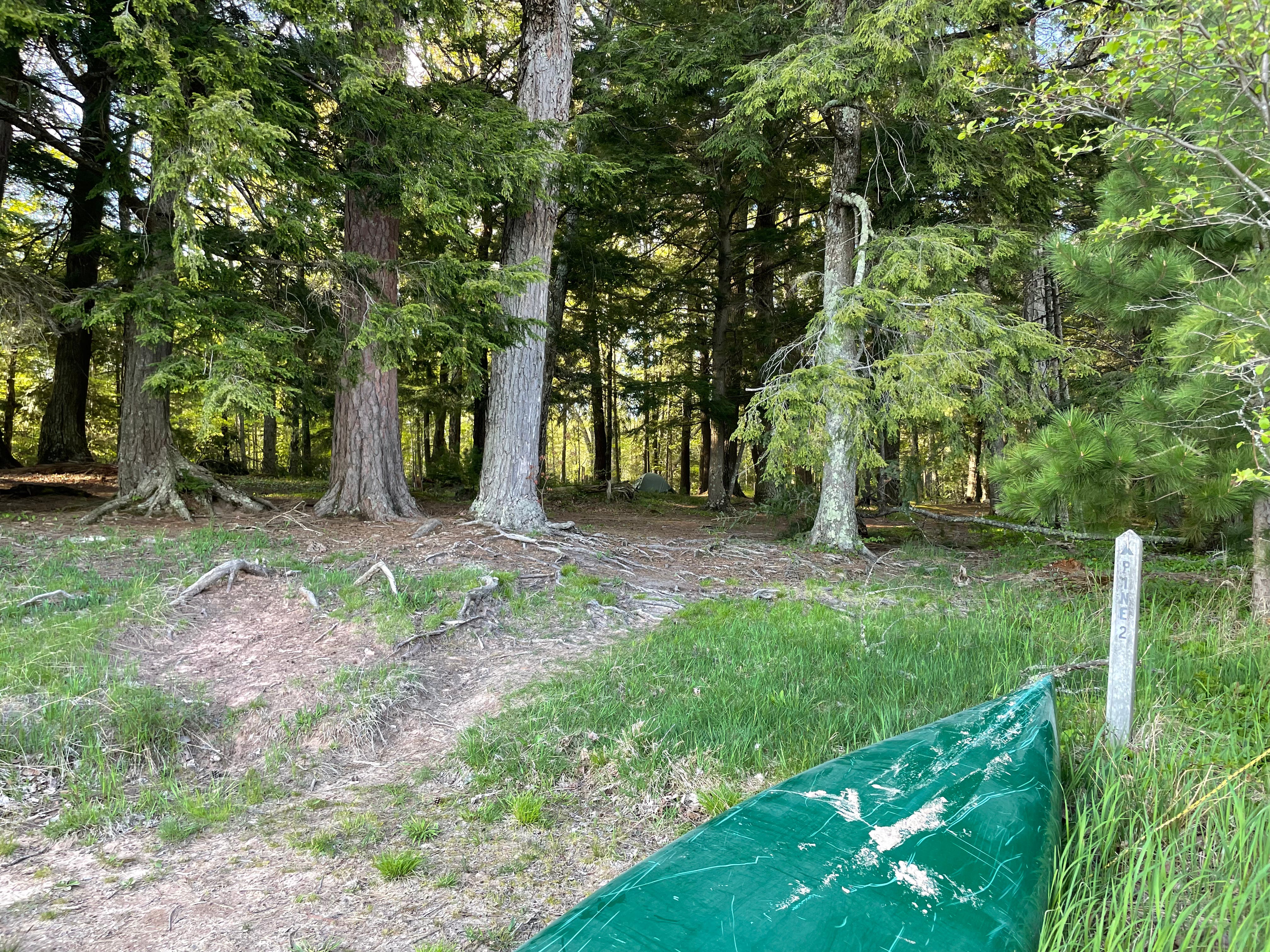
The small and faded—but still useful!—signpost that marks the Pine-2 campsite:
I would love to try canoe camping sometime, if you need a partner in the future