

Learning to Glamp
Or the luxury of being able to stand upright in a tent

I finally understand the appeal of glamping.
Last year, I spent 45 nights in tents designed for backpacking and I’m on track to reach that number again. Backpacking tents offer limited space—just enough for me to snuggle up with my gear—but it has always felt sufficient. Until a volunteer trailbuilding project this past August.
I was camping in my (now discontinued) 2-person freestanding tent from LL Bean1. It’s bigger and faster to set up than my Lunar Solo, a 1-person trekking pole tent, however, bigger is relative. Not only can I not stand in either tent, I can only sit upright in one specific spot. That means that getting dressed is easiest in a reclined position, which is fine until it’s rainy and my muddy overalls are dripping all over my sleeping bag.
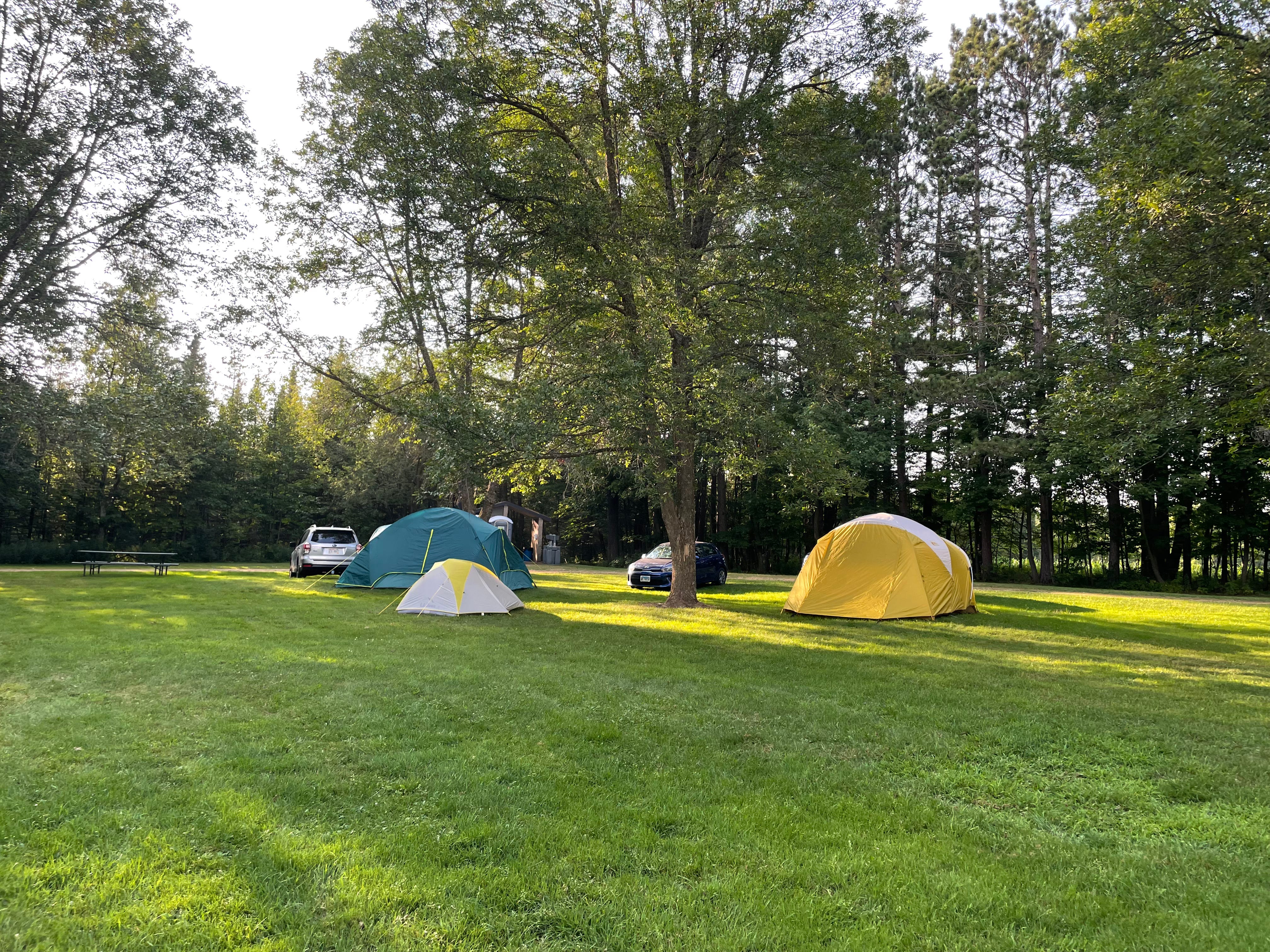
I had been wet for several days at the trailbuilding project when I hit my breaking point. The idea of continuing to sully my one dry refuge with dirty, damp clothes was beyond the pale. Luckily, a friend threw me a lifeline.
“You can change in my vestibule, if you want,” Michelle offered.
Michelle has a six-person tent all to herself, with a vestibule tall enough to stand in. I stepped in to discover that the floor space of her vestibule was almost equivalent to the entire interior of my tent. Maybe trying out a bigger tent would be an interesting experiment?
On the drive home from that project, I stopped at my parents’ house to do a load of laundry and rifle through their old camping gear. I was on the hunt for a hexagonal four-person Eureka tent with a high ceiling, purchased circa 1996.
Imagining what I could do with that extra room was intoxicating. Excluding the vestibules, the interior of my LL Bean tent measures around 30 square feet. The Eureka tent offers triple the space! But it comes with a cost—it’s not as well ventilated, it’s a pain to set up solo, and it requires seven zippers to get inside. Seven!2
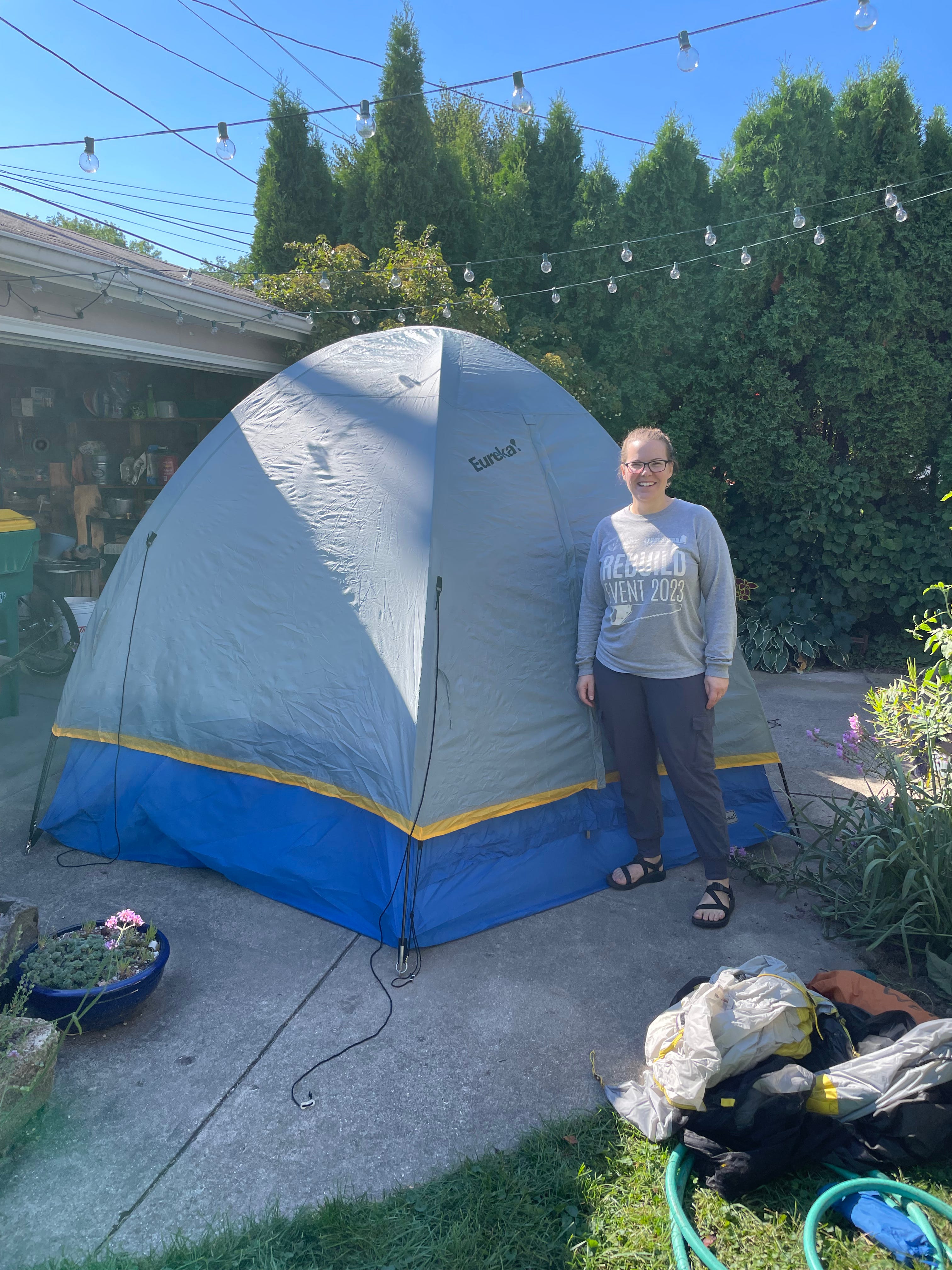
I put the tent through a series of quality checks, including spraying it down with a hose in search of leaks. Everything seemed fine, but I seam sealed the rainfly, just to be cautious. It was now ready for a field test.
At the next trail project, I set up the Eureka tent by myself in under twenty minutes. I was exceedingly proud of myself, until I noticed that one of the corners was floppy, no matter how carefully I staked out the edges. I fussed with it, but couldn’t find any obvious errors with my pitch. That night, staring up at the ceiling with a nearly full moon above me, the outline of the poles became visible through the fabric. Two of the three poles had ended up in the wrong sleeves, so they were not criss-crossing at the center of the tent as designed. There was nothing I could do about it in the dark, so I went to sleep.3
It was a smoother process to set up the inside of the tent. Any worries I had about overpacking were quickly quashed. My sleeping area, which previously would have taken up the majority of my floor space, was off to one side, with a walkway separating it from the sitting area. Yes, I decided that what this open concept space needed was defined usage areas, so I created a living room.
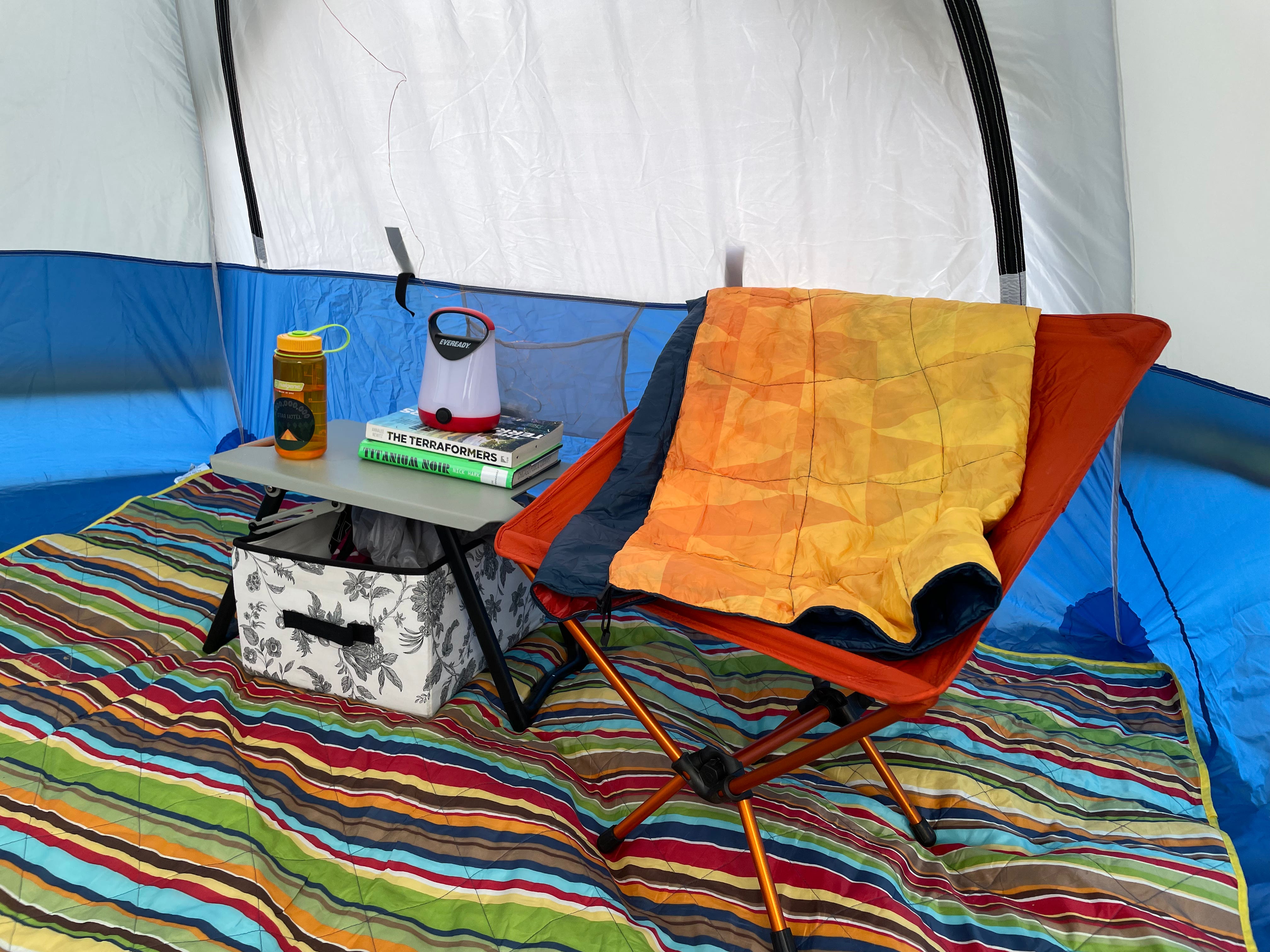
Furnishing my bigger digs was easier than I expected, but that may be an indictment on how much camping gear I’ve accumulated. The only purchase I had to make was a $6 battery-powered lantern to supplement my existing light, which was too small to adequately brighten the tent for late night reading.
I started with a striped picnic blanket, so that the legs of my chair and table wouldn’t rip the tent floor. A rug is said to bring a room together and the bright colors of this one really livened up the place. I placed my mini folding table below one of the windows and set my backpacking chair at a jaunty angle next to it. Then the accessories—lantern on the table, camp blanket draped across the back of the chair, microfiber towel moonlighting as a doormat (and providing another pop of color) next to the entrance. Pretty swanky!
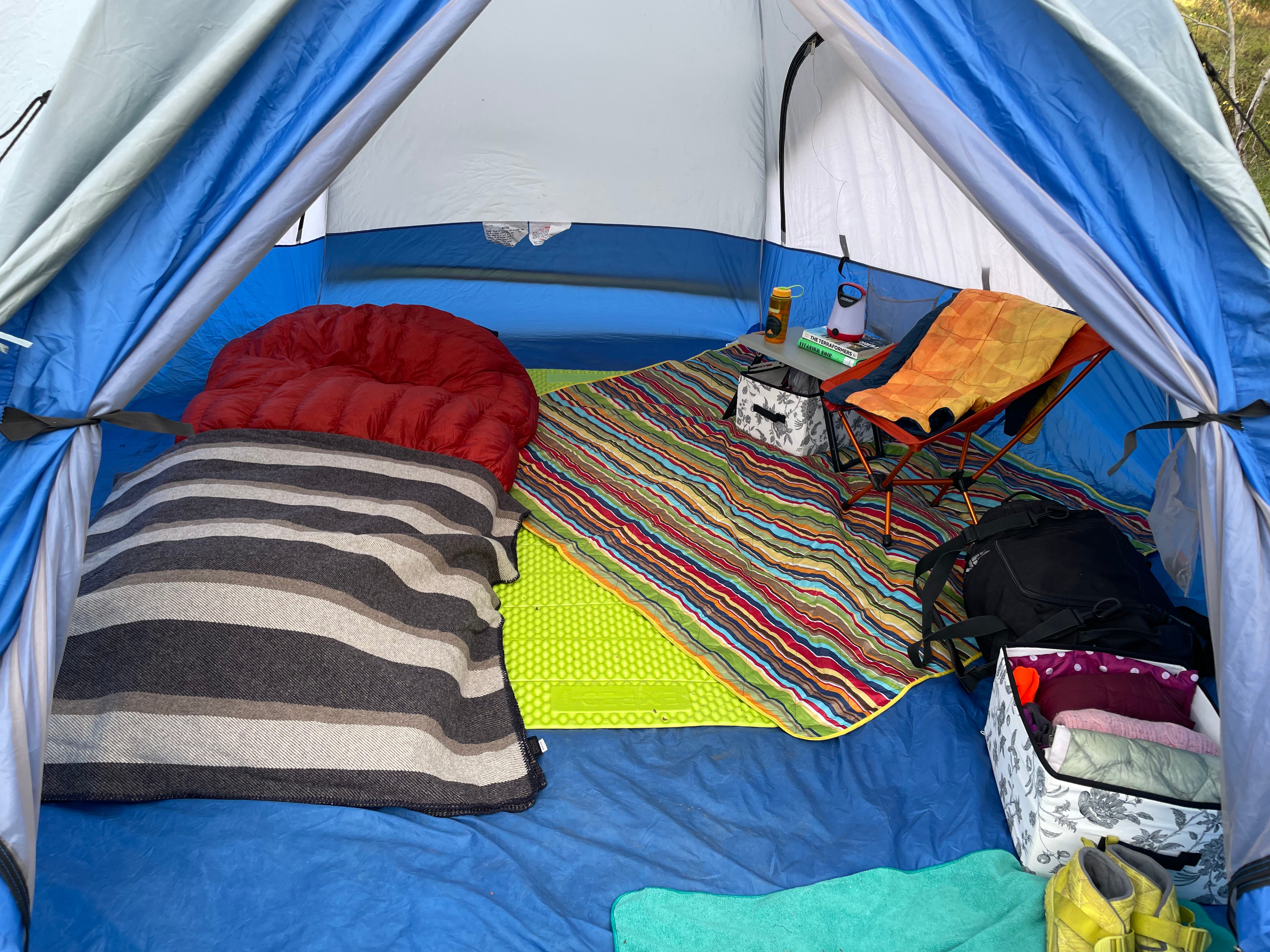
The living room ended up being mostly decorative—I sat in the chair exactly one time—but I still appreciated having options. Plus, the extra furniture helped make the tent feel less cavernous. Small tents are cozy by default, but big ones require a concerted decorating effort to exude a homey warmth.
I did, however, take full advantage of the open floor space and tent height. I stretched each night before bed. I got dressed standing up. I sprawled out on the picnic blanket at the end of one work day when I was too sweaty to climb into bed, but also too tired to be vertical. It was fantastic.
The Eureka tent isn’t going to supplant my other tents4, but it definitely has a spot in the lineup now. When I spend all day doing trailwork, I deserve to come back to a comfortable camp! That’s why I upgraded my sleeping pad this past spring and that’s why the shift to more spacious accommodations was probably inevitable.
I can confidently call my first foray into glamping a success, even though I was a bit too literal when breaking down camp. As I folded up the tent poles, the shock cord that had held one of them together for the past quarter century decided it could stretch no more and broke—thank goodness that happened at the end of the trip! I have since raided my stash of MYOG supplies5 and rethreaded all three poles with elastic from this millennium. The tent is ready for its next adventure, so my glamping experiment can continue!
Long live the LL Bean Microlight UL 2P! I truly love this little tent, even though the rest of this post is about me being swayed by high ceilings and endless floor space. I might not be able to stand up in the Microlight, but I can set it up in five minutes flat and it has survived inches of wet snow, high winds, and more rain that I care to estimate.
Without the rainfly, it’s only six zippers, but that’s still too many.
I did fix it the next day, with the help of Michelle, who once again was in the tent next to mine. Thank goodness for friends!
In case anyone is worried about my old tents feeling left out, just this past week I took my LL Bean tent on a trip to the Chequamegon-Nicolet National Forest. However, in a devastating turn of events, a branch fell on the tent and ripped not only the rain fly, but also punctured the interior mesh. It’s fixable, but for now it is out of commission while I get it patched up. The Lunar Solo is only ever used for backpacking trips, so it probably always feels overlooked.
I agree that trailwork calls for a roomy tent. I backpack with a Big Agnes Copper Spur 1P, the latest in a series of solo tents that are just enough to sit up in. My trailwork tent is a 4P Mountainsmith, all for me. I can't stand up all the way, but close enough. When backpacking, I use a cut-down Nemo Switchback with an 1/8" short pad on it. When I want luxury, I bring an inflatable pillow. Doing trailwork, I bring a cot that is similar to a chaise lounge. I can fold the back up to lean on it while I read. My pad is an ExPed downmat inflatable or a Thermarest. I bring a cotton sheet and a flannel sheet for when it's too warm for my sleeping bag. A big plus of the cot is that I can slide my duffle and other stuff underneath, leaving room for a bedside cooler and table. I recommend getting a fan/light combo that uses the same kind of battery we use for tools.